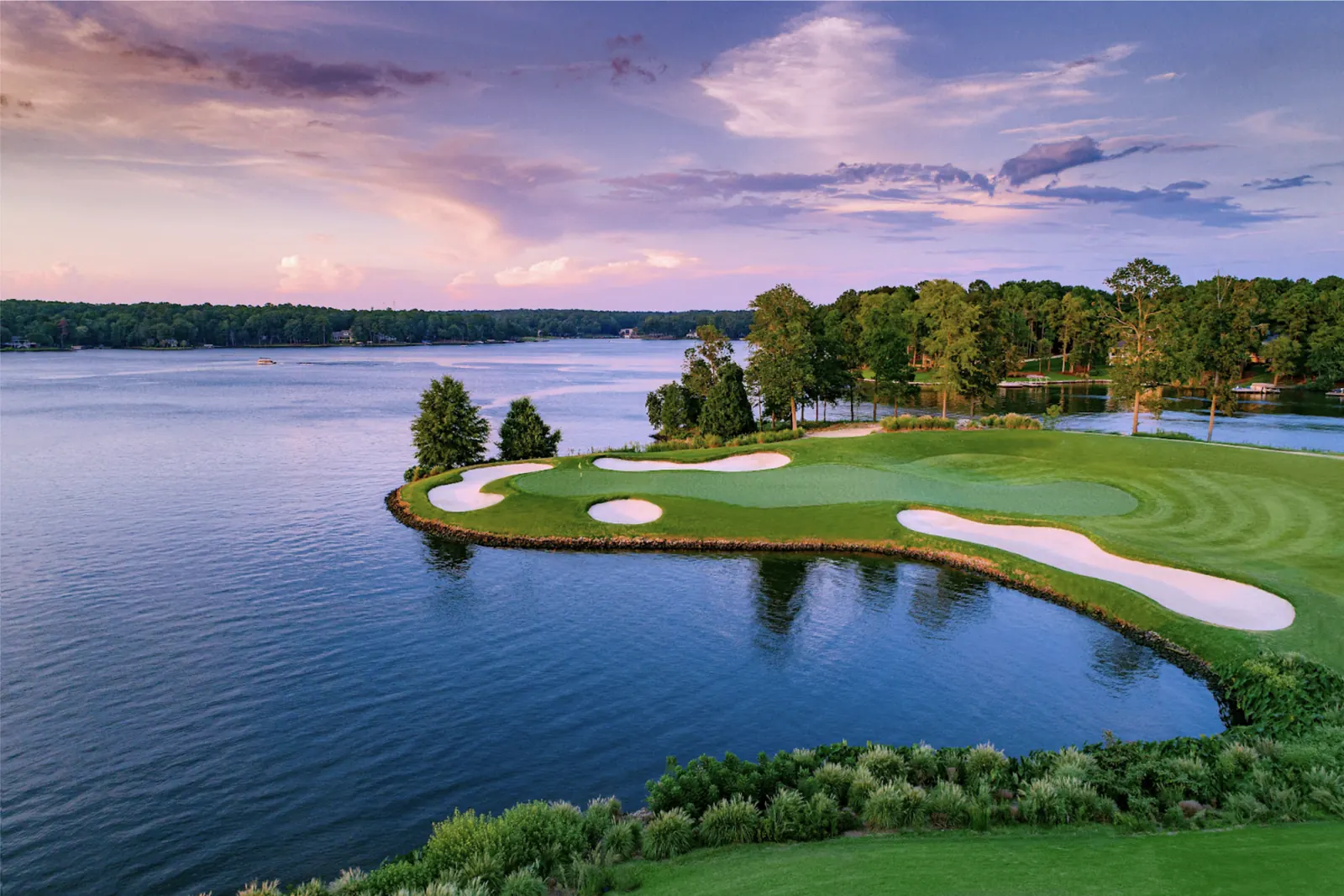
When talking about golf, many concepts may appear at the same time. Entertainment, passion, strategy, strong emotions, among many other things. Sustainability is definitely not the first thing that comes to mind, but it is something that is progressively getting more attention. In the context of sports, sustainability can be understood from different scopes, including equality, sports as a tool for development, education, and of course, environmental sustainability. In this blog post, we will analyze the importance of a sustainability focus when approaching the global impact that sports have in today’s world.
Golf is a traditionally popular sport, which has been suffering a decrease in popularity during the last decades, seeing a decline of more than 6 million players, and the closure of more than 1,200 golf courses between 2003 and 2018 (Carmine Dicesare, 2021). Even though this might sound worrying, in the past 4 years, each year, at least 3 million beginners (National Golf Foundation, 2023) have tried golf as a new sport. This sheds light on how the sport is regaining the popularity that might’ve been lost earlier in the millennium.
Now, however popular or unpopular the sport is, that does not change the fact that it is one of the most water-intensive sports in the world. A typical 150-acre golf course uses approximately 200 million gallons of water a year, enough to supply 1,800 residences with 300 gallons per day of water (Fluence Corporation, 2025). In California, golf courses account for the highest water usage in non-agricultural businesses, at over 100 billion gallons a year (Hydroviv, 2017). Both these facts are not surprising, but still shocking considering that 4 billion people deal with extreme water scarcity for at least one month each year (UNICEF, 2025). The need for water has always existed, but the available information has never been as accurate as today, which means we can be more conscious and make coordinated efforts to demand a more responsible and sustainable way of managing water in the sports context.
Decreasing water usage on golf courses should be the main priority of the governing bodies of the sport, because it’s not only cheaper to manage the courses if water consumption is lower, but it also represents a step in the right direction towards environmental sustainability having a priority in the sports context. There are several ways in which golf courses can efficiently manage water and decrease its use (USGA, 2016):
- Plan irrigation: In golf courses, naturally, there are certain areas that will need less water than others (due to climate or location). If you efficiently plan your irrigation systems to not overspend water in these specific areas, you will save water. This planning also includes the prioritization of avoiding waste when using irrigation water.
- Reuse irrigation water: there are already worldwide known systems and methods to reuse irrigation water in golf courses. The main disadvantage of this option is the high costs associated with building the infrastructure, and the really high electricity costs related to the distribution of the reused water.
- Water saving devices: moisture meters and in-ground sensors help accurately measure and report soil moisture levels, so data-driven irrigation programming decisions can be made with this collected information.
- Reduce the turf in out-of-play areas: replacing turf with other options for the soil of the places that are out-of-play will help reduce wasted water in these areas.
- Education and training: maintenance personnel, golf course managers, and even players should receive training regarding the importance of water application techniques for being as efficient as possible with water use in the golf context. Furthermore, the personnel that maintain these golf courses should be presented with detailed training on the correct use of these water saving techniques and methods.
Stakeholders around the sport of golf are already aware of this problem, and are constantly looking for ways to be more efficient and sustainable, not only because it means contributing to sustainable development of the world, but also because it means saving costs when maintaining the golf courses. Water is an interconnected resource; communities, businesses and individual users depend on one another to ensure there is a sustainable supply for everyone. In a second part of this article, we will unveil how this data compares to the standard water consumption in different regions of the world, and what the average need of water per household is in these regions.
Sports hold different meanings for different people, and in the case of golf, its long-term sustainability depends on responsible water management. By prioritizing sustainable practices, the sport can continue to grow while supporting the well-being of communities and the environment.
Sources (6)
- Hydroviv. Water conservation in the sporting industry. https://www.hydroviv.com/blogs/water-smarts/water-conservation-sporting-industry
- FactSet Insight. The demise and rise of golf. https://insight.factset.com/the-demise-and-rise-of-golf
- National Golf Foundation. Golf industry research. https://www.ngf.org/golf-industry-research/#golfers
- Fluence Corporation. Golf course water use. https://www.fluencecorp.com/golf-course-water-use/
- USGA. How can courses minimize water use? https://www.usga.org/course-care/water-resource-center/how-can-courses-minimize-water.html
- UNICEF. Water scarcity. https://www.unicef.org/wash/water-scarcity